Write your own
Lua on the console itself, a sandboxed VM, and errors that print a line number instead of taking the machine down. No toolchain, no cross-compiler, no cable: write it, copy the folder to the card, play.
V1 alpha — running on the bench since August 2026
It plays like an arcade machine and opens like a text editor. Every game is a Lua script you can read, change and rewrite — including the ones somebody else wrote.
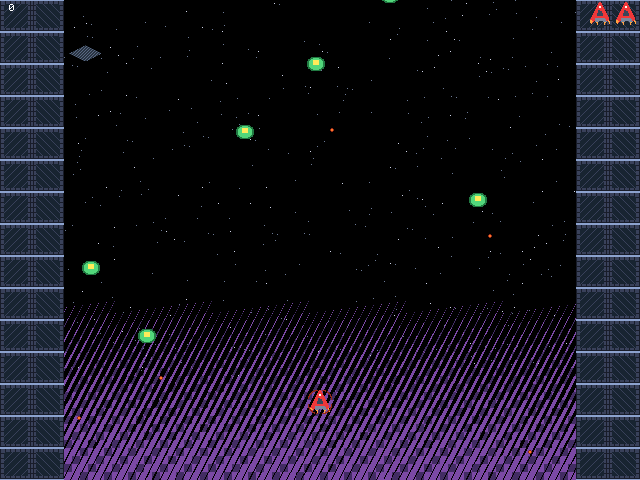
A whole game: a level, a character who walks and jumps, and collisions. The
three constants at the top are the ones worth breaking first — set JUMP to
-8 and he clears anything; make GRAVITY phy.PX // 8 and he floats down
like a feather.
Notice what the program does not do. It never draws the scenery: the level is
a tile background, which the mixer chip scrolls for free, so the whole frame
costs one sprite — the hero. That is the budget this console is built
around, and it is why _draw is two lines long.
It runs in this page, on the same C core as the board — no account, nothing sent anywhere. A mistake gives you an error with its line number, never a dead console.
Arrows to walk, Space to jump.
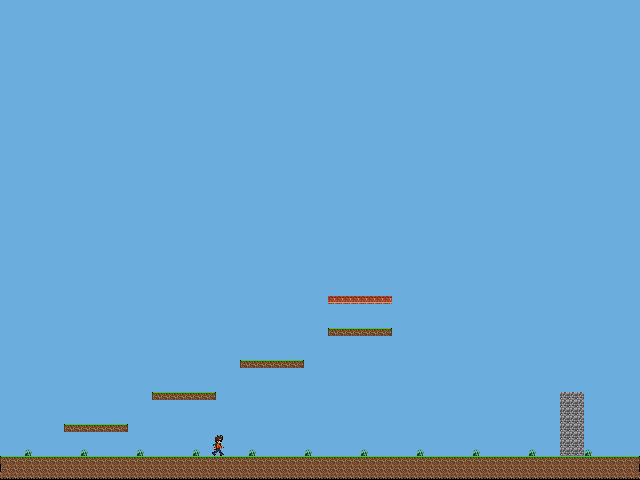
Click the screen to take the controls
The demo above is one game, in one file. The full simulator holds the games people have published, and a set of tutorials that build a game one feature at a time — tiles, layers, scenery, objects, sound.
Anything published can be cloned: you get your own copy, its art and its levels included, and you change whatever you want. Playing and reading the source need nothing at all. Keeping your copy, and publishing a game of your own, is what an account is for.
Lua on the console itself, a sandboxed VM, and errors that print a line number instead of taking the machine down. No toolchain, no cross-compiler, no cable: write it, copy the folder to the card, play.
Games are plain folders. The console lists the published games, fetches one over Wi-Fi onto its card, and you can open the source right after — and see exactly how the trick was done.
Hardware under CERN-OHL-P, firmware under MIT: the licences are chosen and their notices are already in the tree. The repositories are private while the V1 board lands — when they open, the schematic, the board and every line of firmware are yours to read, fork and manufacture.
Two games, each recorded twice: in the browser simulator, then on the board itself over HDMI. Same Lua, same art, same engine — that is the whole point of the simulator, and the only honest way to show it is side by side. Sound is on.
Sixty millimetres square, and the reason the games above hold 60 frames per second without tearing. This is the part for people who want to know how.
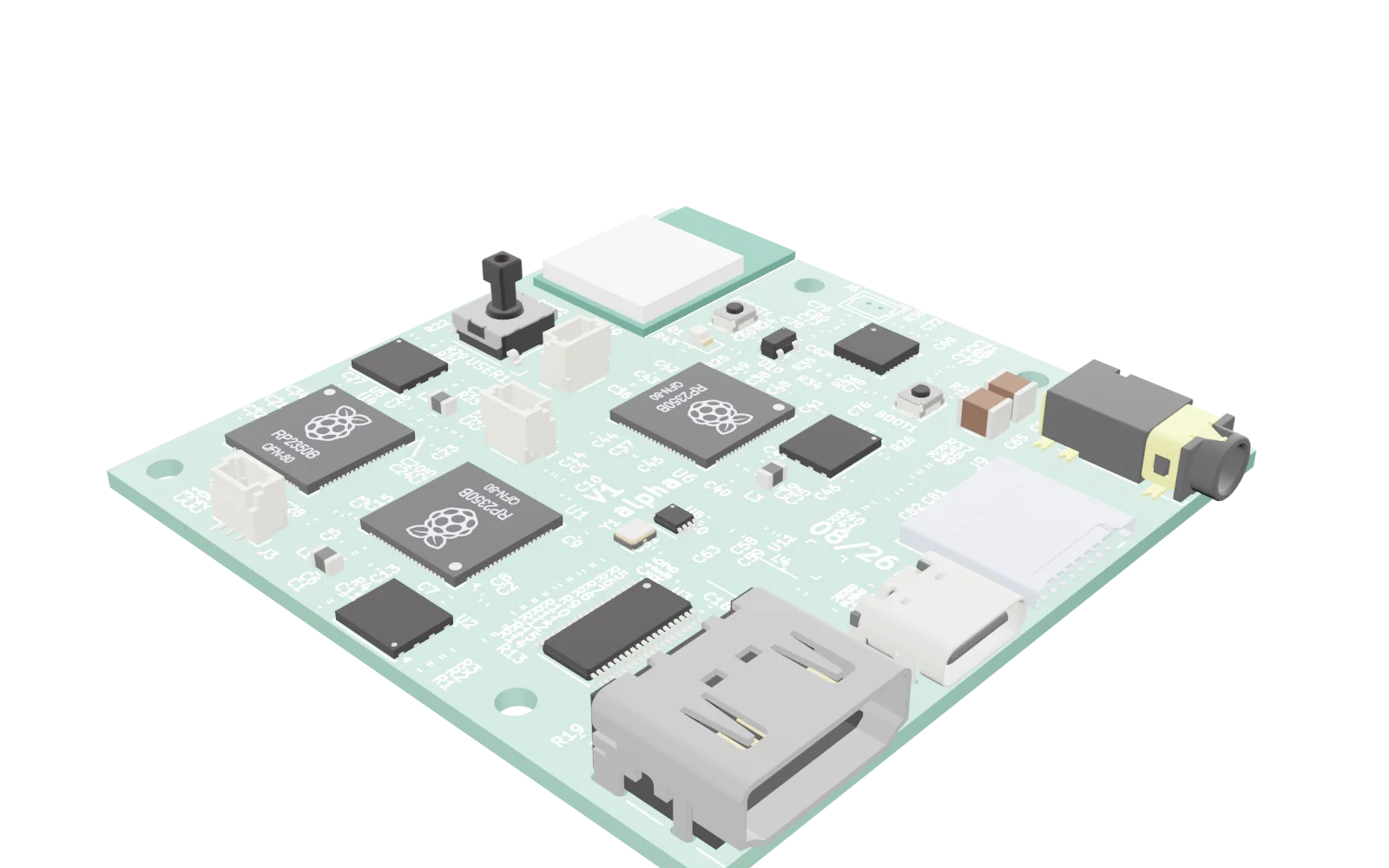
A scanline lasts 31.75 µs — 8 000 cycles of one core at 252 MHz. Blitting 3 000 sprite pixels costs 6 000 of them, before the background is fetched, composited and pushed out. So sprites get a chip whose two cores work alternate lines, background and mixing get a second, and the game gets the third. Each one brings its own SRAM and its own NOR, which is the bandwidth that actually binds.
Three RP2350B sharing one oscillator, six cores, 3 000 opaque sprite-pixels per scanline measured on the board — roughly twice a Neo Geo — plus a scrolling tile background, over plain HDMI, with no tearing by construction.
The V1 alpha board arrived on 26 August 2026 and has been on the bench since. Running today: HDMI out from the three chips, sprites and a scrolling tile background, games loaded from the micro-SD card, Bluetooth gamepads, Wi-Fi, published games downloaded straight onto the card from the console’s own menu, four-channel music and sampled effects out of the headphone jack, and the console updating its own four firmwares over the air. A browser simulator runs the same core as the board, with tutorials you can read and clone. Still open: HDMI audio, the verified leaderboard, and the V1 board itself — a voltage supervisor and a secure element are going on it.
Nothing here is for sale, and there is no release date. The pages below are the honest version: measured figures, decisions with their reasons, and the parts that are still open.