The board
A sixty-millimetre square. Plug in HDMI and USB-C, slide a card in, and it is a console — everything on the specification page comes out of this one object. Turn it around.
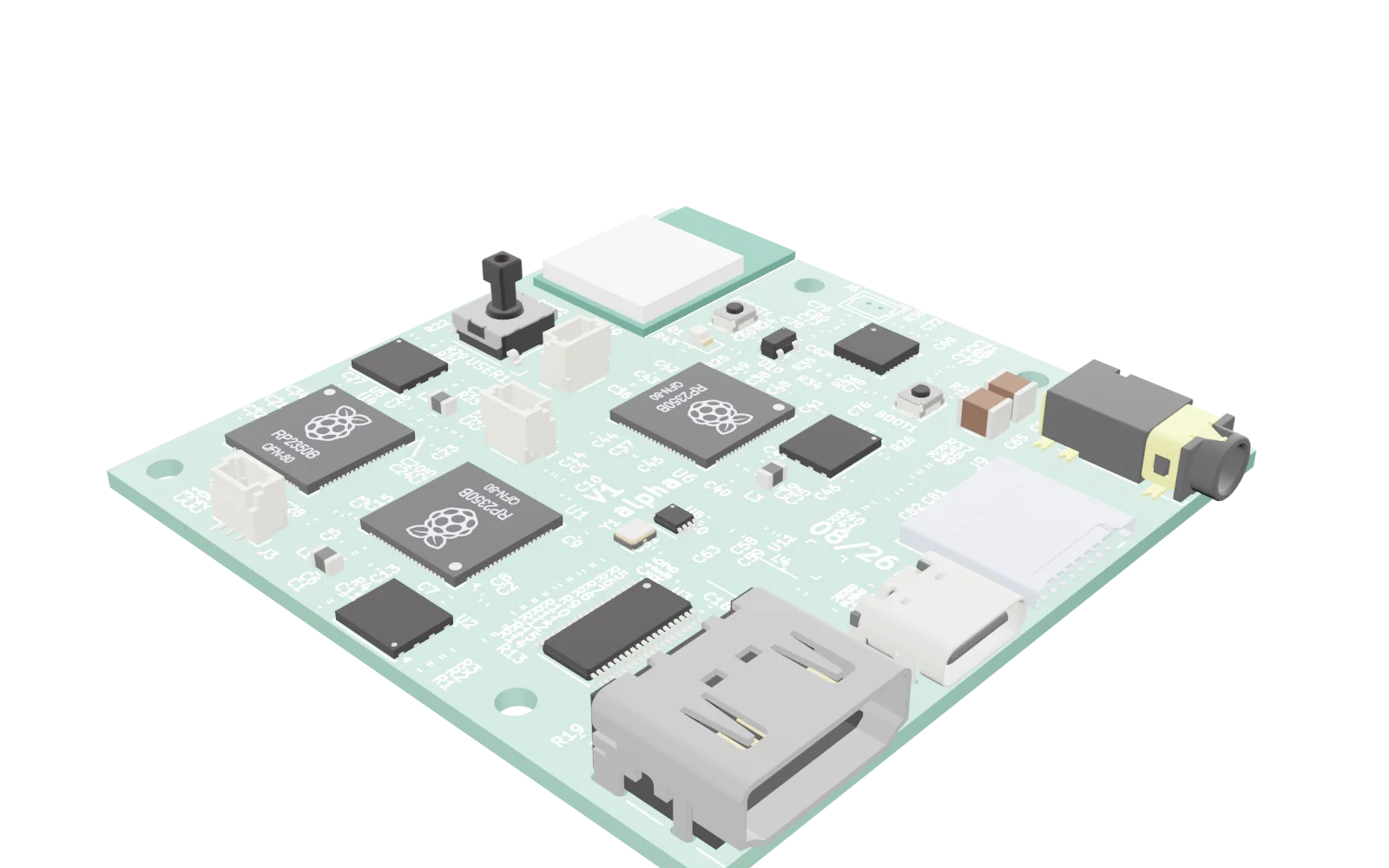
Size and connectors
60 × 60 mm, four screw holes.
HDMI type A, USB-C 2.0, micro-SD with card detect, a 4-pole audio jack with switch and a speaker connector. Gamepads, keyboards and mice arrive over Bluetooth. One user button. Three SWD connectors, one per chip, because a board you cannot probe is a board you cannot fix.
Power
5 V from the USB-C input.
One thing to know before plugging the board in: USB power alone is not enough for the nominal case. A USB port advertises 500 mA by default, and the board negotiates nothing on its CC lines. Either the firmware measures those lines to find out what is available, or power comes from elsewhere.
Where the hardware stands
The model above is the V1 alpha, sent to fabrication on 5 August 2026 and on the bench since 26 August. It is the board every measured figure on this site comes from: HDMI out of the three chips, the sprite engine, the tile background, games off the micro-SD card, Bluetooth gamepads, Wi-Fi and sound out of the jack.
V1 is coming, and it adds three things the alpha does without:
- a secure element, which gives each console an identity of its own — that is what will let a score be attributed to a board rather than taken on trust;
- a power supervisor, so that a supply sagging under load is caught and handled instead of turning into a mysterious reset — see the USB note above;
- an expansion connector, to bring the unused pins out rather than leave them under the solder mask.
Nothing here is for sale, and there is no date.